Showing posts with label Florence Tilkens. Show all posts

Thursday, 5 February 2015

‘En garde! Prêts? Allez!’


When I received an invitation to an international fencing competition at the Copper Box Arena in London, I did not have an hesitation: I love fencing which, despite its modern sophistication, remains one of the most ancient and complete physical exercises in the world. And this event was going to be THE opportunity to discover the first Olympic venue to have opened its doors at the Queen Elizabeth Olympic Park: The Copper Box Arena!

For those who do not know the Copper Box Arena, it was London’s newest 7,000 capacity venue that hosted
handball and modern pentathlon fencing during the 2012 Olympic Games, as well as goalball during the Paralympics. Located close to Hackney Wick station, the Copper Box Arena, despite its bland and boxy-looking exterior, is considered as one of the Olympic Park’s greenest initiatives. Far from being a 'box', it is a terrific space for sport: the four outer walls of this square building are covered in recycled copper cladding which will change colour and get green as it ages; natural light pipes in the room illuminate the interior, reducing the need for artificial light; rainwater pipes recycle water. The interior is fitted with multi-coloured retractable seats which give the place a vibrant feel. The competition area, in the centre of the building, is covered with a state-of-the-art sprung wood floor which makes the place stylish and modern. Since the Olympic Games, the Copper Box has been transformed into a venue for a wide range of indoor sports as well as cultural and business events.

As a matter of fact, the Copper Box Arena was very well suited for the peculiarities of an international two-day sabre fencing competition. Perfectly organised by the British Fencing Federation and Camden Fencing Club, this competition welcomed teams and supporters from all over the world. No worry about fencing supporters! You will never hear shouts or see signs of over-enthousiam! Fencing is a combination of speed, agility, concentration and strategy. Timing is key in fencing; therefore it does not leave any room for supporters’ burstings! Supporters know it and behave!

This 2-day challenge was a real treat in a perfectly suited environment. The Copper Box Arena always brings brand new, top international events to London. If you do not know it yet, check their website: you will not be disappointed!

Written by Florence Tilkens. Florence is Social Media & Marketing Manager at FOCUS.


For more information, please visit www.focus-info.org 

Should you wish to share your expat experiences in the UK, please contact us: office@focus-info.org

Thursday, 18 December 2014

… PUBS UP 3!


I recently received a most cryptic invitation asking me ‘whether I would like the Cheshire Cheese’. Sure! Never tried it but… Of course, when you have spent your childhood in France, you are bold about cheeses! I therefore confirmed…

Surprise! This invitation was not for a gourmet evening of Cheshire cheese; it was for a drink, or two, in one of  London's oldest pubs: Ye Olde Cheshire Cheese.

A Grade II listed public house at 145 Fleet Street, initially set up in 1538, Ye Olde Cheshire Cheese was rebuilt shortly after the Great Fire of 1666. The interior is made of flagstone floors, dark wood panelling, some considered to be original, and there is not a single right angle in the tiny rooms! The vaulted cellars are thought to belong to a 13th-century Carmelite monastery which once occupied the area. The entrance to this pub is situated in a narrow alleyway and is very discrete except for the names of all the monarchs who have reigned in England during the pub's time, written to the right of the door.

Once inside, you are literally  ‘puzzled’ with the layout as it looks like a Cluedo board where you have to stoop your head and dive down the most amazing and cramped staircase to find out all the bar rooms.

The pub oozes history and literature as the walls are covered with plaques showing famous regulars such as  Twain, Tennyson, Conan Doyle, Dr Johnson, The Rhymers' Club (a London-based poets, founded in 1890 by Yeats and Rhys) and even Voltaire! Charles Dickens was also a regular and mentioned the pub in a famous scene of 'A Tale of Two Cities': Sydney Carton invites Charles Darnay to dine in Fleet Street, ‘up a covered way, into a tavern’  for ‘a good plain dinner and good wine’.

And guess what? There used to be a ghost! The ghost of a midwife
who haunted the place until she induced the residents to dig up the bones of many dead children she had killed and buried there… At least, this is what a 1680 ballad called ‘A New Ballad of the Midwives Ghost’ tells…

Ye Olde Cheshire Cheese truly encapsulates years of London history and tales. In this month of celebrations, stories about magic and with the help of  a couple of beers, you may encounter the Spirit of Christmas in one of the tiny rooms…
Happy festive season!

Written by Florence Tilkens. Florence is Social Media and Marketing Manager at FOCUS.                                                      
For more information please visit www.focus-info.org  

Should you wish to share your expat experiences in the UK, please contact us: office@focus-info.org


Thursday, 27 November 2014

Head, tails and blind tasting…


I was recently invited to a fundraising event in support of St Mungo’s Broadway. This event, organised by SA Law, took the form of a contest: a blind wine tasting… clearly my favourite type of contest!

After the welcome drinks, we were divided into teams and sat around tables laid with platters of cheese and crackers. We first listened to a presentation of St Mungo’s Broadway's initiatives to help the homeless and after the introductions, we started !

Believe it or not, there is a true art to taste a wine blind. It is like a puzzle where colours, aromas and tastes make up the pieces. It is a challenge which requires concentration and immerses you in remote memories.

The oenologist who had chosen the wines started to give us elementary tips: how to stick your nose in a glass of wine, to give it a couple of sniffs, swirls and sips; how to look at a wine, its viscosity, pigmentation and color which is usually the first clue to find out the variety of grape used in its production.


We were given charts with several suggestions for the country, the name, the year and the price. We started with a white wine: it was not so easy! We got the country, the year and the price right… not the region! We were then offered two glasses of sparkling wine: one was Champagne, the other was a sparkling wine processed according to the ‘Méthode Champenoise’. Our first, instinctive choice was unanimous and... correct. However, when we started to apply the techniques of smell (yeast versus fruit), sights (small bubbles versus bigger ones) and got into the intellectual – if I may call it so – approach, we ended up with the wrong result! We still got the correct price and year. The next test was not wine… We were given a small box with 4 tiny jars. Each jar contained the aroma of a common fruit we had to recognise. This was baffling: the fruits were pear, blackcurrent, raspberry and grapefruit. Though we were all familiar with these fruits, it was truly difficult to recognise them by just smelling them. The toughest was undoubtedly black current despite being one of the most popular fruit juice in the UK: Ribena!


At this point of the contest, the general atmosphere was merry, chatty and... bubbly! The last wine was a red… the toughest one! The aspect of the robe and aromas were clearly misleading… We ended up with the correct price and age but the wrong country and region. How frustrating!

This great evening was drawing to an end. We had a raffle and ended with ‘Head or Tails’ which I had never heard of.

We all left with the curious impression that we were parting from dear friends… Truly there is nothing like a wine tasting evening to make friends and enjoy the lightness of life!


Written by Florence Tilkens. Florence is Social Media and Marketing Manager at FOCUS.

For more information please visit www.focus-info.org

Should you wish to share your expat experiences in the UK, please contact us: office@focus-info.org

Thursday, 6 November 2014

The 311 steps… (not exactly a Hitchcock movie !)


October is a fantastic month in London… As the summer turns into autumn, the great city’s colours dramatically change from green to copper and red and London welcomes a new guest: Fog! October is also when British schools break up for a half-term holiday and many London attractions – Natural History Museum,  the Tower of London, London Bridge - put on special family-friendly events.

My 9 year-old niece visited us for half-term and we decided to spend her last day in Tower Hill, almost a ‘time travel machine’ with its concentration of medieval, Tudor, Victorian, 20th century and futuristic samples of London. We started with the Tower of London’s amazing exhibition of over 8,000 ceramic poppies. Planted in the dry moat around the Tower, these poppies commemorate the death of each soldier from the UK, Australia and the Commonwealth killed during World War I.

When we arrived, hundreds of tourists were already there. The spectacular display, visible from all around the Tower, was baffling and was a powerful evocation of World War I’s toll on the army. 

The crowd was so thick that we did not stay for too long. After a few photos, we quickly moved to the Victorian Tower Bridge. We started with the North Tower that showed an animated video where spectators were invited to experience the story of the Bridge as part of an audience with Queen Victoria, Sir John Wolfe-Barry, the designer of Tower Bridge, and his architect Sir Horace Jones. Short and funny, the animation appealed to both adults and children and explained why the construction of a new bridge was a dire necessity for Londoners. The South Tower offered a bespoke video which depicted the construction of the bridge. Then we walked to the Bridge’s high-level West Walkway, enjoying a spectacular panoramic view of London… much better and less crowed than the Millenium Eye! We ended our visit with the Engine Rooms. The atmosphere there took us back to the Victorian era and its taste for science, progress and technological improvement, an era when steam was everything ; we even experienced a virtual bridge lift! 

We came out at dusk ; the fog had already ‘swallowed’ the Shard. A typical October evening in London! 

On our way back, we stopped in Monument Street to climb the 311 steps of the colossal doric column built to commemorate the 1666 Great Fire of London and the rebuilding of the City.  The view from the top was worth the climb: totally breathtaking… and not just because of the climb ! Funnily enough, when coming down, we were offered a certificate confirming that we had climbed the 311 steps of the Monument… We did not count  but I reckon that our muscles understood! The trip ended in the nearest pub where we discussed our afternoon full of sensations, emotions and discoveries in the great city!


Tower Bridge:  http://www.towerbridge.org.uk/TBE/EN/
The Great Fire of London: http://www.bbc.co.uk/programmes/b00ft63q


Written by Florence Tilkens.  Florence is Social Media and Marketing Manager at FOCUS.
 
For more information please visit www.focus-info.org

Thursday, 16 October 2014

Ready… Steady… GO!


On Sunday, 12th October, I did not have a second thought when I had to wake up early… too early for a Sunday… I was nonetheless accompanying a team of runners to the amazing Royal Parks Foundation Half Marathon, undoubtedly the most beautiful run in London!  We were not the only ones: at 8.00 am Victoria and Knightsbridge tube stations were packed with feverish runners ready to enter this great challenge.

When we reached Hyde Park,
the atmosphere was  welcoming and cheerful. The Life Guards and The Blues and Royals bands, members of the Household Cavalry, were welcoming the crowd and playing in honour of the runners ABBA’s tunes. The Food and Fitness Festival was just opening and an English double-decker bus had been transformed into a… cocktail bar – quite well attended at this early hour of the day! The area was already packed with families, supporters and busy runners. Luckily, the weather was dry and sunny and Hyde Park looked glorious with shades of green and yellow.


The Royal Parks Foundation Half Marathon* was created in 2008 and takes the runners on a 13.1 mile route which passes through London’s famous sites: Buckingham Palace, London Eye, Houses of Parliament, the Royal Albert Hall and four of the great city’s eight Royal Parks: Hyde Park, Green Park, St James’s Park and Kensington Gardens. This is one of the biggest charity runs in the UK and charity runners truly appreciate: supporters line the whole race and cheer you on from start to finish. Since its creation, the Royal Park Foundation Half Marathon has already raised over £ 18 million.

The start of the race was divided into pens to allow faster runners to take off quickly and the ‘amateurs’ to enjoy the site before starting.  Charity banners, t-shirts, buzzers were filling the first 6 miles which took the runners through London’s beautiful landmarks. The race went on through the Royal Parks which, at this time of year, are intensely coloured and blooming.

Lucky and attentive supporters could see the elites, top UK and overseas runners, jostling for the first place and ending the second lap of the park.

The finish of the race was truly amazing with thousands of people lining the streets and cheering on every  runner. This great atmosphere generated a sense of emotion, community and achievement: 16,000 runners, 800 volunteers, over 200 charities of all sizes and thousands of supporters were involved in the event.

At the end of the race, we could not just go back home: we were all too excited! We therefore ended in our local pub to celebrate and plan the next half marathon!


An amazing London experience and a great day for all, runners or supporters!


* http://royalparkshalf.com/


Written by Florence Tilkens.  Florence is Social Media and Marketing Manager at FOCUS.
For more information please visit www.focus-info.org

Monday, 11 August 2014

‘All the world’s a stage…’


Summer in England is always an eventful experience for an expat: there is so much to do, so much to see and discover…

I was recently invited to Oxford to a theatre play… 'A surprise !  You’ll see'  was all I was told when I enquired. I therefore boarded the « Oxford tube » - a coach – and off I went.

London-Oxford is very well connected, either by train or coach;  with coaches leaving every 10 minutes, 24 hours a day, it makes a day trip back and forth very easy, comfortable, without too much organisation or planning in advance.  Oxford has almost become a London suburb !


Once in Oxford and after wandering in the old streets, I was taken to the beautiful gardens of Wadham College*, one of Oxford’s largest colleges, famous for its gardens, both aesthetic and eclectic, notable for their collection of trees and curiosities from the past - mainly sculptures.


I then found out that the theatre play, Shakespeare's 'As you like it', was an outdoor performance.  Of course my first reaction was to scrutinise the sky in search of these tiny, lovely clouds which always turn themselves into black and threatening ones ! 

This outdoor production was from the Oxford Shakespeare Company**, which has been performing in the breathtaking setting of Wadham College Gardens for 12 years.  A second source of amazement was that no stage could be seen:  the whole garden was the stage!


Like all spectators, we sat down in a perfectly cut lawn and first sipped what is undoubtedly the most popular cocktail for summer garden parties in England :  Pimm’s – what else ?  The actors suddenly appeared from every corner  and the magic started !  The public enjoyed the first act in a most relaxed way :  sitting or even lying in the grass.  After the interval which coincided with a magnificent sunset, we were invited to stand and move to another part of the garden where chairs had been placed for the spectators. We stayed there until the end of the play when night replaced dusk and tiny garden lamps were lit.

This play was indeed a great choice for a summer evening in Oxford :  full of characters - portrayed with an amazing talent by the very few actors - plots, witty dialogue, romantic action, tremendous enthusiasm and exuberance, songs and music and... a happy ending!   We all sang, clapped, laughed, vibrated with the performers!  We could have stayed all night in these beautiful, timeless surroundings… A true English mid-summer night’s dream for expats eager to understand more about English culture and heritage !


*Wadham college: www.wadham.ox.ac.uk
**Oxford Shakespeare Company: www.oxfordshakespearecompany.co.uk


Written by Florence Tilkens.  Florence is Social Media and Marketing Manager at FOCUS.
For more information please visit www.focus-info.org


Thursday, 17 July 2014

No smoking…please !

As soon as the English weather gets better and days longer, garden parties flourish throughout the country.  London, with many private gardens, falls for this informal and relaxed way of enjoying a beautiful English summer evening…

I have recently been invited to the Belgrave Square Garden Party. Located in the south-west side of Hyde Park Corner, it is Belgravia’s green ‘ lung ‘. This 4.5 acre private garden, designed by George Basevi* and first planted by Thomas Cubitt** in 1826, features large plane trees, pergolas, a tennis court and a playground for children… a wonderful setting for a summertime English garden party!

Upon  arrival, all guests were welcomed by a member of the Garden committee and offered a drink which made the threatening sky a little less scary… Fortunately, we all managed to stay dry until we sat down for dinner.  Grilled meats and fish, mediterranean vegetables and French wines were a perfect match for a light barbecue.

Those who stayed late had an unsual experience :  we were introduced to famous Lazaro Collazo, an authentic ‘torcedor’.  For those who do not know what a ‘torcedor’ is – and I must confess that, being a non-smoker, I was part of them – he/she is a master in  cigar rolling.  Lazaro Collazo began his career as a torcedor in Cuba in 1998 and in very few years, achieved the highest possible ranking within the categories defined by the Cuban Cigar Industry.


Tobacco plant
Like a fine wine, a hand-rolled cigar -formulated, produced, grown, and created by a master- is considered as one of the finest things in life.  Being totally ignorant in the art of cigar-smoking, I was introduced to all steps; first select the cigar by nothing else but the “feel” of it in your fingertips: Is it dry? Does it have a uniform firmness alongside?  Can you notice any vein and moistness? Then clip it in order to get the ideal draw. Light it and this happens to be a true art in itself as you should only light it by using a strip of Spanish cedar to ‘toast’ the end of the cigar.  Once the tip is glowing red, wait a little until the cigar reaches “smokability”!  You can then lightly puff your cigar, letting the smoke through the stick escape from your mouth. This is when you start tasting flavours and aromas such as oak, strawberry, mango, toast, coffee… almost as in wine tasting.  The Cigar Rolling Master was so passionate about his art that I decided to try and therefore followed  each path very carefully… This led me straight to coughing  and… laughter ! I am not sure I will turn into a cigar smoker… It was however worth trying and made of this pleasant English garden party something special!


*Georges Basevi: English architect (1794 –1845), designer of Belgrave Square.
 ** Thomas Cubitt(1788–1855:  leading master builder in London in the second quarter of the 19th century.

CGars:  http://www.cgarsltd.co.uk


Written by Florence Tilkens.  Florence is Social Media and Marketing Manager at FOCUS.
For more information please visit www.focus-info.org

Wednesday, 2 July 2014

Tea tasting at The Milestone…


I must confess that I have never been a tea drinker !  Brought up in a place where coffee was the next best beverage after wine, I never really paid too much attention to tea and invariably used to leave it when invited for tea time.  And yet… When I heard about a tea tasting being organised at The Milestone Hotel, I signed up immediately… obviously more attracted by the prospect of spending some time in the exquisite, Grade-II listed, quintessentially English boutique hotel. 

Often described as an English country mansion, set in the heart of London, The Milestone hotel is a very discrete place where privacy and elegance are the key words.  Amazingly,  the original dwelling on this site, Kensington House, was built in about 1689.  Beautifully restored to five star standards and now part of the Red Carnation Hotel Collection, The Milestone is a unique place with a typically English feel, home away from home.   With its selection of suites and apartments, all a perfect illustration of English taste, The Milestone was indeed the best choice and perfect place for this other English tradition :  tea tasting!


Upon arrival, the guests were taken to a classic wood panelled boardroom, the Windsor Suite, where we were introduced to Lalani & Co’s precious leaves.  Lalani & Co is a family run company dedicated to the trade of exceptional teas.  Tea is like wine: its flavour is created by the terroir, the skill of the producer, the care of handling and ageing.

A welcome cocktail made with Japanese cooking matcha,  a finely milled green tea - one of Lalani & Co’s most famous organic teas, often used in recipes of green smoothies, macarons or ice-creams - refreshed and awakened our palate in order to prepare it for the three varieties of tea we were going to taste.

The first one was a rich and silky Japanese tea; its notes of umami and spring greens perfectly matched its name,  ‘Wazuka Garden’, produced in the Kyoto prefecture.

A deep amber, Sauternes-like nectar  with a powerful scent of honey, was then served in a stemmed glass.  This tea, produced in Taiwan’s Jade Mountain at 4,000-5,000 feet high, was a true celebration of the senses with its shades of amber, sweet scents and smooth, almost creamy,  texture ;  its name :   Jade Mountain Honey Special Spring… almost an anthem to poetry.  Needless to say that it was perfectly assorted to the canapes served during the tasting.

Then came the last : an enchanting and complex Nepal tea.  With its woody and tobacco notes, the Jun
Chiyabari brought a perfect conclusion  to a tasty evening in one of the most delightful hotels in London…  The evening ended with a prize draw for a dinner for two at The Milestone’s intimate and relaxing Cheneston’s restaurant… A genuine English experience !

And guess what ?   I believe that I have  been converted to tea drinking…


The Milestone Hotel, 1 Kensington Ct, London W8 5DL
www.milestonehotel.com

Lalani & Co, Dephna Building, 14 Cumberland Avenue, London NW10 7QL
www.lalaniandco.com

Written by Florence Tilkens.  Florence is Social Media and Marketing Manager at FOCUS.

For more information please visit www.focus-info.org


Tuesday, 22 April 2014

Croissants ? Not so French after all…

On a bright, sunny  morning, I was enjoying a “café-croissant” at one of my local bakeries in Pimlico (“Quartiers” in Warwick Way),  when I suddenly asked myself why this delicious pastry had such a funny shape… While enjoying the unique taste of  the delicate, golden, crescent-shaped roll, I started investigating on Google… and found many interesting theories about “croissants” …the most remarkable being that they are not French at all!


Here are a few stories about its origins:

The Battle of Vienna
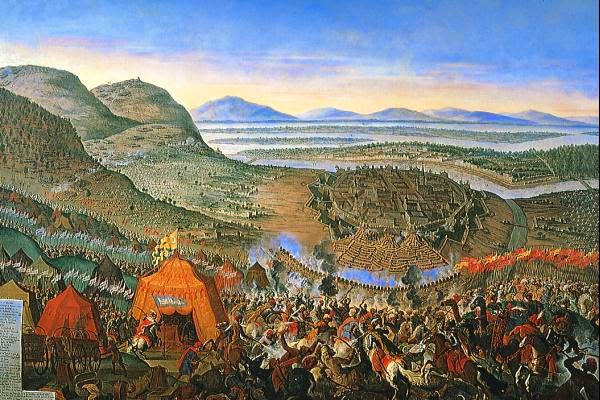
In 1683, during the Ottoman siege of Vienna, legend says that a baker working late at night heard the Turks tunnelling under the walls of the city and alerted the military.  The military collapsed the tunnel in on the Turks and eliminated the threat, saving the city.  The baker baked a crescent shaped pastry,  called “kipfel”, in the shape of the Turk’s Islamic emblem, the crescent moon, so that when his fellow Austrians bit into the croissant, they would be symbolically “devouring” the Turks.


Marie-Antoinette and the “Croissant”
Another legend is that Marie-Antoinette, Louis XVI’s Austrian bride, introduced the croissant to France.  Recalling memories of her favourite pastry from homeland, she requested the royal bakers to replicate it.  Nonetheless food historians question this as there are no records of the pastry in the numerous lists of foods from that time.

August Zang:  an Austrian in Paris…
An Austrian artillery officer, August Zang founded a Viennese bakery at 92 rue de Richelieu in Paris, in 1839.  This bakery served Viennese specialities including the “kipfel” and inspired French bakers who turned it into what is now known as “croissant”.
It seems that no printed recipe for the present-day croissants was written before the early 20th century and the earliest French reference to “croissants” was found in Payen’s “Des Substances Alimentaires”, published in 1853.  Will we ever know the true story of “croissants”? Probably not… This should not prevent us from enjoying their unmistakable taste!


Written by Florence Tilkens. Florence is Social Media & Marketing Manager at FOCUS.

For more information about FOCUS visit:  www.focus-info.org

Thursday, 27 March 2014

Top Funny English Idioms you may not know

An idiom is an everyday figure of speech or metaphorical expression whose meaning cannot be taken literally. Idioms often go against the logical “rules of language and grammar” despite being commonly used by the language’s native speakers. If you look closely at the literal meaning of most idioms, you will realise they are often downright hilarious. Here is a list of some of the funniest English idioms you may not know, most of which are drawn from British English. Enjoy!
1.    Do a Devon Loch
Devon Loch was a racehorse that collapsed just short of the winning line of the 1956 Grand National race in the UK.  If someone does a Devon Loch, they suddenly fail when everybody expects them to succeed or simply crumble at the very last minute when they are almost winning.
2.     Do a runner
When someone does a runner, he leaves a place in a hurry in order to avoid paying for something (like in a restaurant) or flees a difficult situation to escape punishment. Like many British idioms, this particular idiom originates from one of Shakespeare’s popular plays, Anthony and Cleopatra, a gripping story of romance and tragedy that was first performed in 1606.
3.     More holes than a Swiss cheese
While delicious, Swiss cheese is hard, pale yellow or white with many holes. If something has more holes
than a Swiss cheese, it has a lot of problems; there are many things wrong with it. It is incomplete or lacks important components.
4.     Fall off the back of a lorry
This is the British humorous way of saying you acquired something that was probably stolen, or you are trying to sell something that’s stolen or illegitimate. The American equivalent of the phrase is: “off the back of a truck.”
5.     Hairy at the heel
This disparaging phrase was originally used by the British upper-class to refer to someone who is ill-bred, dangerous or untrustworthy. The image of a hairy heel is indeed striking and funny.
6.     All talk and no trousers
Someone who is all talk and no trouser talks and thumps his chest a lot about doing big, important things, but doesn’t actually take any action. The thought of someone running his mouth with no trousers is funny.
 

7.     If you’ll pardon my French
“Pardon my French,” or “excuse my French” is an informal apology for the use of profane, swear or taboo words. The expression dates back to the 19th century when it was fashionable for Englishmen to use French words – a foreign language then – in conversation, knowing the listener may not understand.

8.     Cat got your tongue
Imagine a cat eating or holding your tongue! Would you be able to speak? No, probably not. That is exactly what the phrase means. If a cat got your tongue, you are unable to speak. Your silence is oddly suspicious. Apparently, the phrase stems from the middle ages when witches were greatly feared. It was said that if you saw a witch, her cat would somehow “steal” your tongue so you couldn’t report the sighting. Not a nice thought but definitely a reason why you would be speechless.


Written by David K Williams - Posted by Florence Tilkens. Florence is Social Media & Marketing Manager at FOCUS.


www.lifehack.org/articles/lifestyle/15-funny-english-idioms-you-may-not-know.html

For more information about FOCUS visit:  www.focus-info.org

Thursday, 20 March 2014

LONDON THEN AND NOW…


In July 2014, I moved back to London after 22 years in Paris. I had already spent sometimes in London, first in the eighties when I was a student, then in the nineties as a professional. I had been dreaming of my return to this awesome city.  Life is always full of commitments which take you away from what you dream about.  I had therefore to wait and simply be happy with week-end breaks or short business trips to London…

My arrival at St Pancras on a bright, glorious day, was a good omen:  I was returning to the place I had always loved… and was looking forward to find out
how much it had changed. 22 years make a big difference and London in the nineties bears little comparison with London today.

At the beginning of the nineties, London was just renewing with optimism after the gloomy eighties which had witnessed many troubles and taken their toll on the great city. I remember that London was just starting to consider itself as a global, multicultural place even if it was not as cosmopolitan as it is today and expatriates were far less numerous.  As regards the aesthetics of London, I have kept mixed memories: beautiful, ancient, listed buildings facing modern, concrete, soul-destroying blocs.


22 years after, London has become a beautiful and dynamic city where nothing seems impossible, where energy is endlessly channelled in and out. Enriched with a continuously growing flow of expatriates from the entire world, London offers such a great heterogeneity. Thanks to the Eurostar – I had just arrived in England when the works started in 1988 – London has become so easy to reach for Europeans.

As for the visual changes, the great city has undergone - and is still undergoing - a vast refurbishment. Take Victoria Street, where I used to work in the nineties, for instance. This street which runs from Victoria Station to Broad Sanctuary at Westminster Abbey used to be a gloomy, dark place where people were just passing by… It has now become a futuristic place, made of tall, bright, glass towers with nice restaurants, cafes, shops and even a beautiful Victorian pub dating back to 1855,  and it is now an enjoyable area to walk around… a true illustration of what London has become…


Posted by Florence Tilkens. Florence is Social Media & Marketing Manager at FOCUS

For more information about FOCUS visit:  www.focus-info.org